A domestic digital technology that lets users see seafood movement routes worldwide at a glance under international standards has been certified by an international organization.
A research team led by Kim Dae-young, a professor in the KAIST School of Computing,reported that its international-standard-based digital transformation solution OlioPass (OLIOPASS) passed performance verification by the Global Dialogue on Seafood Traceability (GDST) and earned Korea’s first certification as a GDST-compatible solution.
OlioPass, which was certified on November 5th, is a digital traceability platform that combines KAIST’s Internet of Things (IoT) technology with international standards. It is designed to record and share, in a standardized way, the information generated during the movement of products and assets from the place of production through processing and distribution to final sale. In particular, it uses a Blockchain-based architecture to fundamentally reduce the possibility of data forgery or tampering.
GDST, the certifying body, is an international consortium established in 2015 at the suggestion of the World Economic Forum (WEF). It works to spread a system that digitally records and shares information across seafood supply chains in line with GS1 international standards agreed upon worldwide. GDST sets, to international standards, the key data elements (KDEs) that must be left in the seafood movement process and the critical tracking events (CTEs) that define when, where and what moved, operating a global standard framework that enhances the reliability of traceability information.
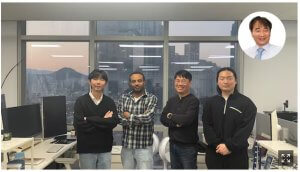 |
develops the international-standard-based digital transformation solution OLIOPASS./Courtesy of KAIST |