
Indonesia has today announced a new milestone in its progress towards full traceability across its seafood industries. The country’s national seafood traceability system – STELINA (Sistem Ketertelusuran dan Logistik Ikan Nasional) – is now fully compatible with the Global Dialogue on Seafood Traceability (GDST) Standard, marking the first time a government-operated system anywhere in the world has accomplished this milestone. The achievement was announced today by the Ministry of Marine Affairs and Fisheries (MMAF) of the Republic of Indonesia, cementing the nation’s place as a world-leader in seafood traceability.
STELINA tracks seafood throughout its journey – from fishing boats and aquaculture facilities to the final market – by capturing information about how and where it has been caught or farmed alongside essential data on processing, handling, and legality. The system has now formally passed the GDST Capability Test, which evaluates a software provider’s ability to send and receive key data in the right format, allowing it to interact with other GDST-compliant traceability systems around the world. This ‘digital interoperability’ enables data sharing between trading partners using different systems – crucial for combating illegal practices, verifying sustainability claims, and meeting the demands of global markets.
The achievement by MMAF, who developed STELINA with full support from the Center for Data and Information (Pusdatin), is the culmination of 4 months of hard work, following the government’s announcement of its intention to become the world’s first nation to align a government-led system with international standards earlier this year. It marks a major step in supporting the country’s sustainable fisheries and aquaculture management and export competitiveness, reducing complexity and improving efficiency throughout the supply chain.
“Passing the GDST capability test is a landmark for Indonesia’s digital transformation in fisheries and aquaculture management,” said Machmud, Acting Director General of Product Competitiveness, MMAF. “STELINA’s compliance with international standards shows that Indonesia is not only serious about sustainable seafood but also about ensuring trust, traceability, and transparency from the source to the global market.”
“Our technical team worked intensively to align STELINA’s data systems with GDST standards,” said Aulia Riza Farhan, Head of the Center for Data and Information, MMAF. “This certification validates our system design and strengthens Indonesia’s digital infrastructure for seafood traceability.”
The capability testing process was conducted in partnership with the Institute of Food Technologists (IFT), whose Global Food Traceability Center provided technical support and validation.
“We are proud to be part of Indonesia’s journey towards this global milestone,” said Blake Harris, Managing Director, IFT Global Food Traceability Center. “The country’s latest achievement demonstrates what can be accomplished when government, industry, and technology partners work together toward a common standard.”
The move has achieved global recognition and seafood industry support. Janti Djuari, Founder & CEO of the Indonesian Pole & Line and Handline Fisheries Association (AP2HI) and Supervisory Board Member of GDST, applauded the success:
“This is a key milestone for Indonesia. STELINA’s GDST certification strengthens the trust of buyers and gives industry players — from traditional fishers to exporters — the tools to align with global traceability standards. It is a breakthrough toward fully integrated, digitized traceability in Indonesia’s seafood value chains.”
The achievement marks the latest key step in Indonesia’s national seafood traceability journey. Building on this, in early 2026, MMAF, GDST, and AP2HI will co-host a national traceability technology roundtable, bringing together leading software and hardware providers operating in Indonesia to support their own journey towards alignment with GDST standards.
The initiative aims to strengthen STELINA’s traceability capability even further by enabling a greater flow of seafood data throughout the country. The focus will be on Indonesia’s largest seafood exports: warm-water shrimp, pole-and-line tuna, and blue swimming crab. With markets for these products in Europe and the United States, the group is working towards application of the GDST standard to meet international demands for accurate, consistent and verifiable sustainability data.
Huw Thomas, Executive Director of GDST, praised the breakthrough achievement and highlighted the importance of the ongoing journey. “MMAF has shown remarkable leadership. STELINA is now the first government traceability platform in the world to meet GDST standards, setting a roadmap for other nations to follow. This next phase will connect Indonesia’s traceability vision with the practical systems and tools that industry uses every day. It’s about making digital traceability work for everyone – from fishers and farmers to retailers and restaurants.”
Commenting on how other nations could follow Indonesia’s example, Thomas adds, “Seafood traceability can be complex and at times daunting, which is why GDST was created. We would encourage anyone on their own traceability journey to reach out to our team. As Indonesia has shown, with ambition, guidance and collaboration, seafood traceability on a national scale is possible – opening the door for global seafood sustainability.”
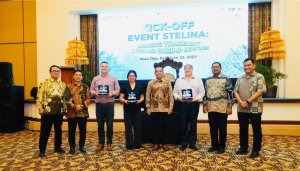 |
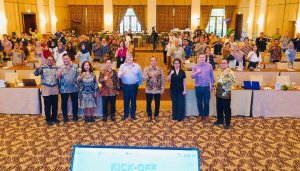 |
|
| Images from STELINA kick-off event: Bali, 22 June 2025. | ||